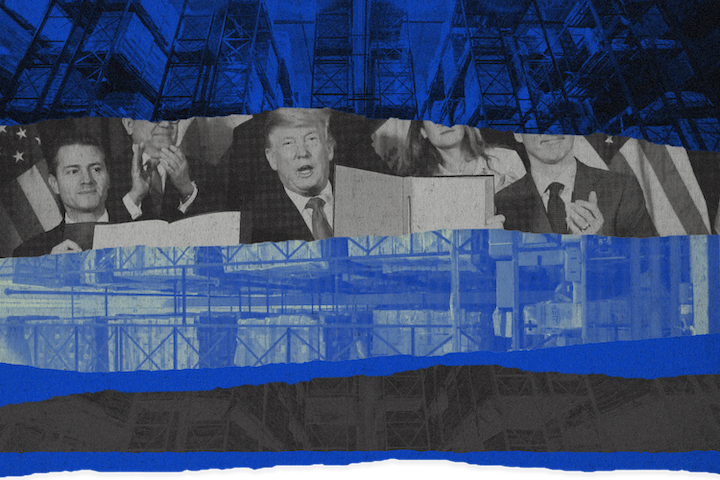
U.S. President Donald Trump’s threats of new tariffs have dominated headlines, drawing renewed focus to the revival of economic nationalism—not just in the United States but in other parts of the world, too. The Biden administration, despite low unemployment and falling inflation, failed to convince voters that its policies left them better off. Pledging to change the country’s economic fortunes, Trump has vowed to impose steep levies on trading partners including Canada and Mexico, and his “America first” message has resonated with many Americans. Economists, however, have warned repeatedly that Trump’s proposed measures, rather than bringing the prosperity Trump has promised, would invite economic pain.
Why is free trade such a hard sell? In a 2019 essay in Foreign Affairs, the economist Alan Blinder explored the deep roots of American protectionism—and why it had gained so much traction in recent years. Even though virtually every economist since the sixteenth century has agreed with the case for open markets, Blinder wrote, “Polls show only tenuous public support for free trade and even less understanding of its virtues.” This lukewarm response reveals a fundamental disconnect between economic theory and the worldview of the general public. Economists have long been focused on “the well-being of consumers,” but they may have misjudged what those consumers care about most. Perhaps the public sees “the central goal of an economic system as providing well-paid jobs, not producing cheap goods,” Blinder wrote. “If so, the standard case for free trade evaporates.”
If trade barriers rise high enough, perhaps spiraling prices would persuade consumers that economic nationalism has its limits. Absent such a crisis, however, open markets may remain bad politics. Their advocates “should do a better job communicating with the public,” Blinder wrote, “but at the end of the day, they may simply have to accept the inevitable: convincing most people of the value of free trade is a losing fight.”
|