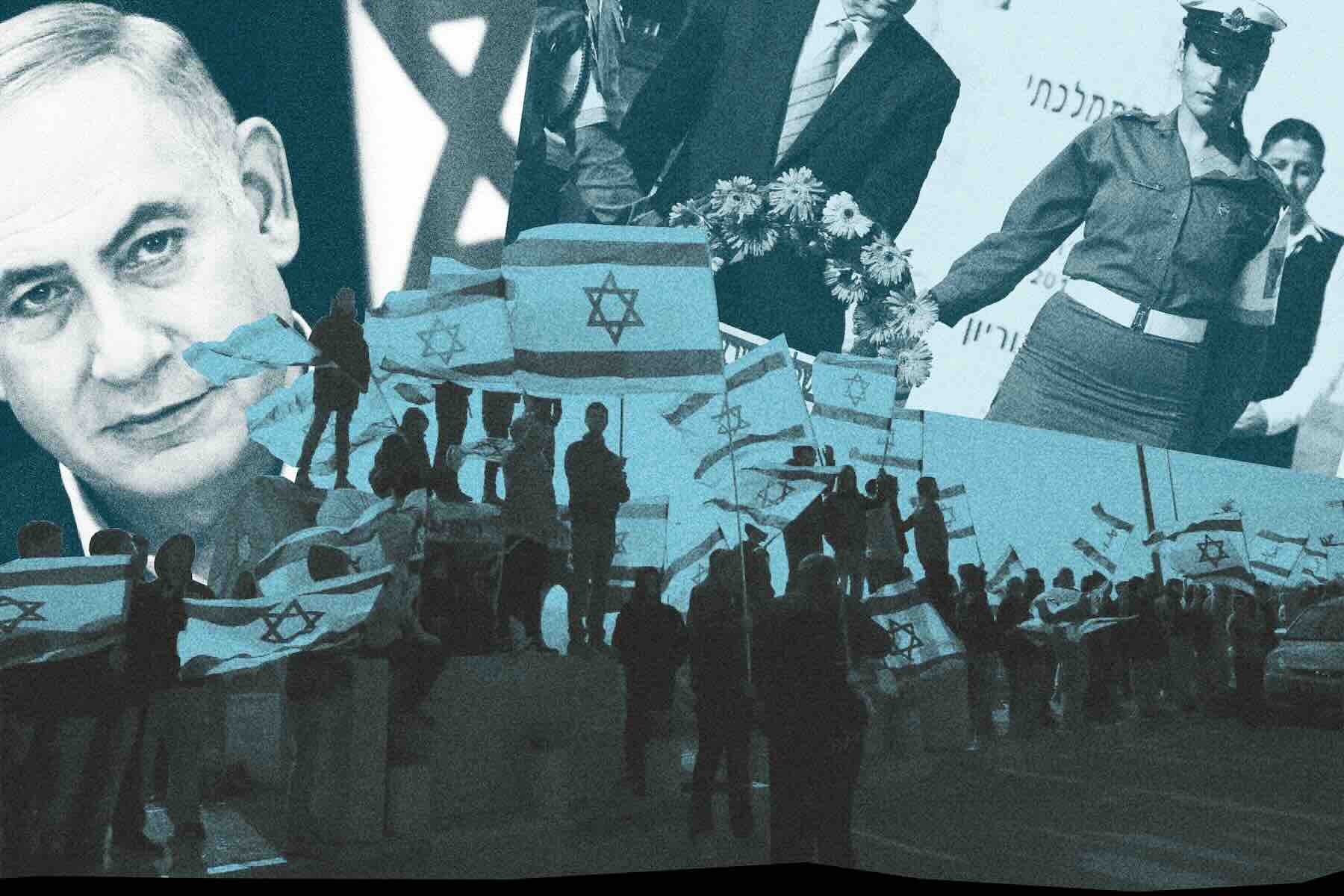
Israelis are voting this week in an election that could unseat Benjamin Netanyahu, the longest-serving prime minister in Israeli history. Netanyahu has been in office on and off since the late 1990s, and he has had a profound influence on Israeli politics—an influence that Aluf Benn, the editor in chief of the liberal Israeli newspaper Haaretz, took to the pages of Foreign Affairs in 2016 to explain. Netanyahu himself had changed while in office, Benn argued, transforming from “a risk-averse conservative into a right-wing radical.” And during his tenure, “the largely secular and progressive version of Israel” had all but disappeared.
To understand Israel’s rightward shift, Benn wrote, one must look back to 1948, the year the country was founded by “a group of secular socialists” led by David Ben-Gurion. That political movement stayed in power for decades. Egypt and Syria’s surprise attack on Yom Kippur in 1973, catching the Israeli military unawares, was “the first major challenge to Ben-Gurion’s idea of Israel.” The war deprived Israel of “its sense of invincibility” and dealt a blow to the ruling left-wing Labor party.
Four years later, Menachem Begin, “the founder of Israel’s right wing,” handed Labor its first electoral defeat. Under Begin’s premiership, the “old left-wing elite” lost many of its government positions but retained influence in academia, the media, and the courts, stirring resentment among many Israelis on the right. “No one has felt that grievance more keenly than Netanyahu, who long dreamed of finishing Begin’s incomplete revolution,” Benn argued. And after decades in politics, Netanyahu finally pulled off his “lifelong goal of replacing Israel’s traditional elite with one more in tune with his philosophy.”